Lease Islands MPA
Marine Life & Environmental Threats
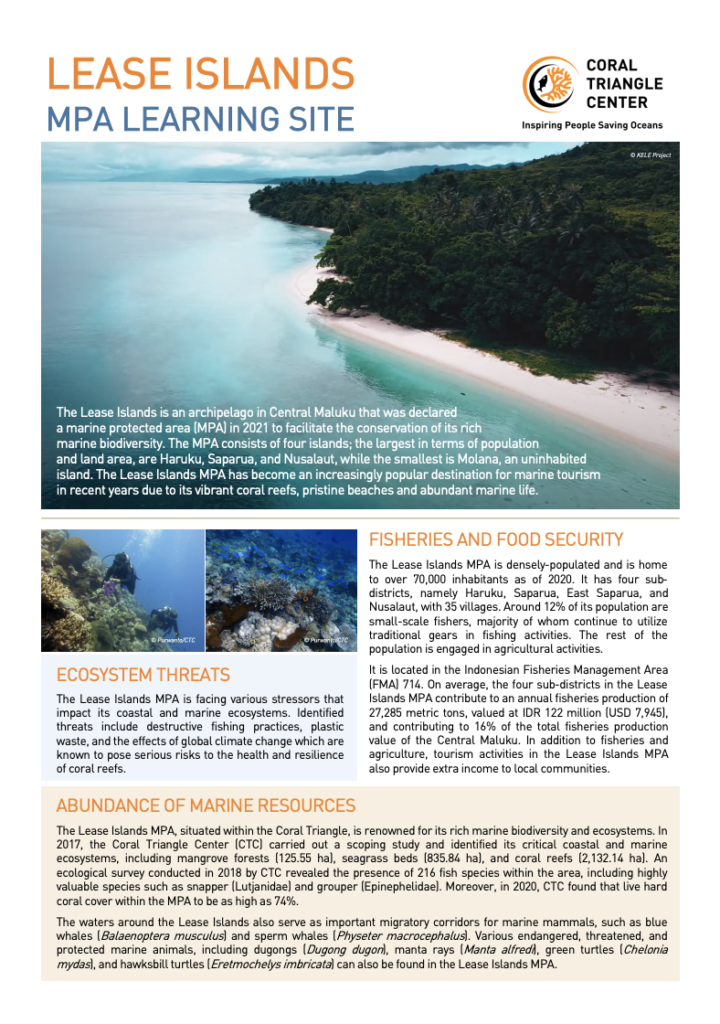
The Lease Islands MPA is recognized for its rich marine biodiversity and critical ecosystems, including mangroves, seagrass beds, and coral reefs. The waters are a significant migratory corridor for marine mammals, including blue and sperm whales, particularly from September to November. The MPA also hosts endangered, threatened, and protected species, such as green turtles and hawksbill turtles, with sharks frequently sighted. Dugongs have been observed grazing in seagrass meadows near villages such as Oma, Booi, and Aboru, as well as around Saparua and Nusalaut islands. Healthy coral conditions with up to 74% hard coral cover have been observed in several areas, including Nusa Laut, East Saparua, and Molana Island.
Despite its ecological wealth, Lease’s marine ecosystems face significant threats. Illegal and destructive fishing methods—blast fishing, trawling, and the use of potassium-based poisons—continue to damage reefs and reduce fish populations, in direct violation of traditional adat law. Plastic waste collects in mangrove roots and seagrass beds; in one case, it was found in the stomach of a dead dugong. Global climate change has contributed to widespread coral die-offs from marine heatwaves, and coastal communities have reported increased storm intensity, erosion, and declining fish stocks, underscoring severe risks to marine health.

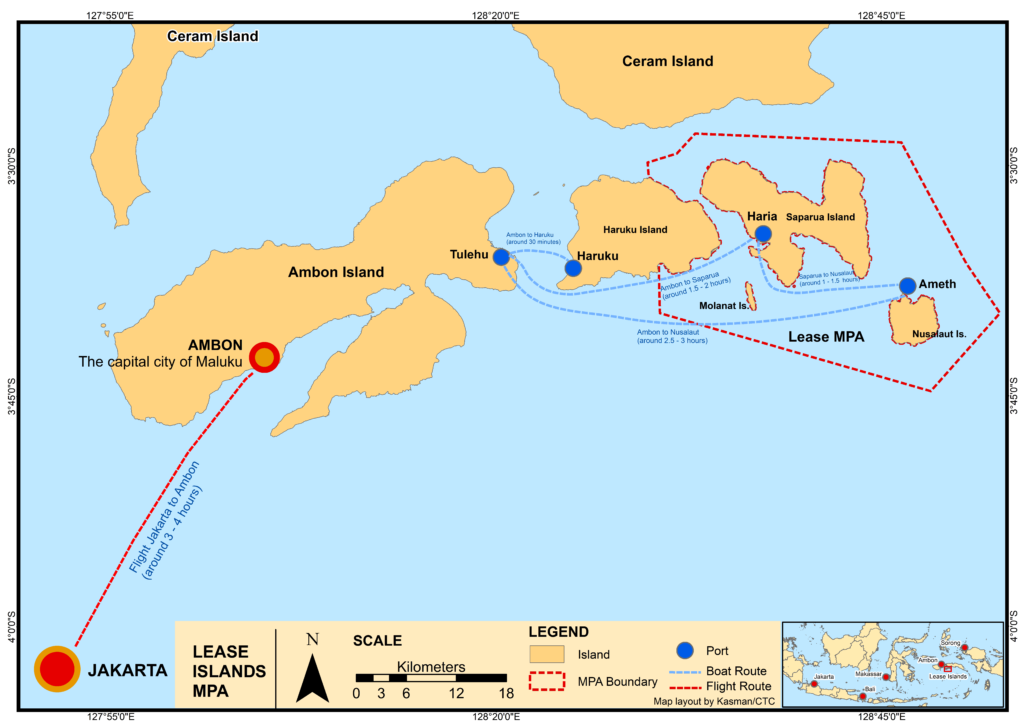
Location Map
Management & Conservation through Collaborations & Partnerships
The Lease Islands MPA is managed as a multi-purpose conservation area that supports sustainable fisheries, marine tourism, and biodiversity protection. Since 2017, CTC has supported its development through collaboration with the Maluku Province Marine Affairs and Fisheries Department (DKP Maluku), traditional authorities, village leaders, and local enforcement groups.
To strengthen community-based governance, CTC helped establish and train the MPA Management Unit, which includes DKP Maluku staff and local community surveillance teams (Pokmaswas). CTC also leads joint patrols and Resource Use Monitoring in partnership with the Coastal and Marine Resources Management Unit, Saparua Police, Pokmaswas, and traditional kewang guardians. These efforts assess resource use, strengthen enforcement, and improve coordination between communities and government.
Reviving the customary sasi system is a key element of CTC’s approach. During Buka Sasi ceremonies, led by local leaders, adult sea cucumbers may be harvested while lobsters and lola shells remain protected. Pokmaswas teams oversee compliance and monitor ecological impact.
In 2022, CTC and the Baileo Maluku Foundation launched the Kalesang Dugong Project to protect dugongs and seagrass habitats through surveys, education, and citizen science. CTC has also delivered training on marine zoning, ecotourism, and biodiversity to representatives from 27 villages.

Learning & Impact
The Lease Islands MPA has been designated as a CTC learning site for adaptive, community-based marine management within the Coral Triangle region. It offers a model for integrating traditional marine tenure systems, such as sasi, with scientific monitoring and collaborative enforcement.
Adat and religious leaders—widely viewed as trusted sources of information—have played a central role in strengthening conservation messages and linking customary practice with formal regulations. Their involvement has helped reinforce community compliance and expand local support for the MPA.
Experiences from Lease are already informing other initiatives across the Coral Triangle, particularly in areas where customary law, citizen science, and participatory governance can be adapted to meet modern conservation challenges.

Learn More
Resources