
Nusa Penida MPA
Marine Life & Environmental Threats
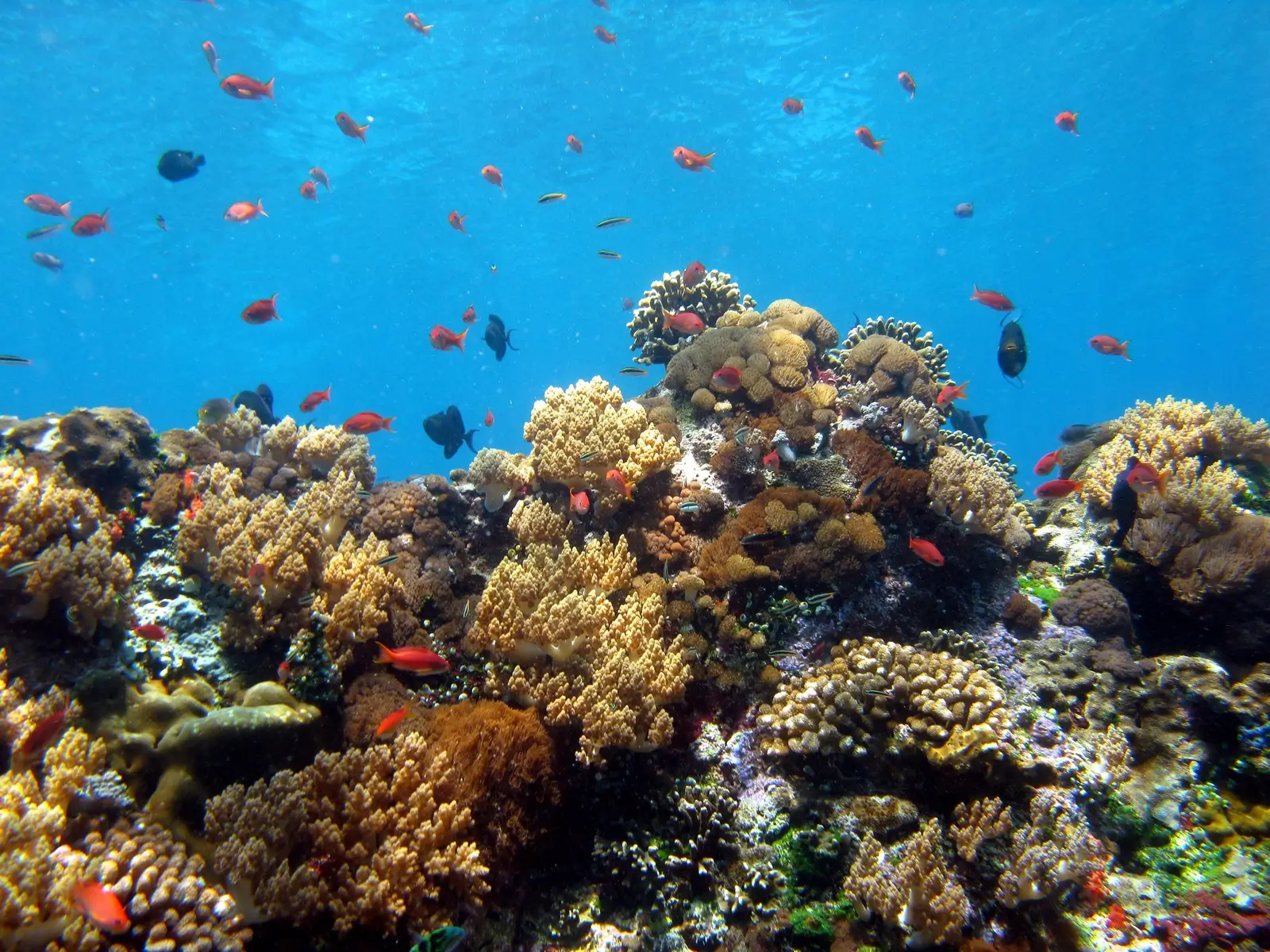
The Nusa Penida MPA includes coral reefs, mangroves, and seagrass beds that support high marine biodiversity. With 296 coral species recorded in 2008, fringing reefs are widespread. Mangrove forests—primarily in Nusa Lembongan and Nusa Ceningan—shelter coastal habitats, reduce wave energy, and filter pollution. Eight seagrass species occur mainly around Nusa Lembongan.
Strong currents driven by the ITF funnel warm Pacific waters to the Indian Ocean through deep channels among the Lesser Sunda Islands. These generate nutrient-rich upwelling that sustains marine productivity, especially between July and October, when plankton attract mola-mola to cleaning stations. Reef manta rays—over 600 individuals identified since 2004—are present year-round. The MPA lies within a major migration corridor for marine megafauna, including five dolphin species, dugongs, sea turtles, and whales such as short-finned pilot, sperm, and baleen whales. Green (Chelonia mydas) and hawksbill (Eretmochelys imbricata) turtles also nest here. Oceanic tuna, skipjack, and trevally mix with reef fish such as groupers, snappers, rabbitfish, and parrotfish.
These ecosystems face growing pressure from tourism, overfishing, and pollution. Reefs suffer from careless snorkeling and diving and unsustainable fishing methods, and poaching threatens protected species. Tourism and population growth strain waste systems, allowing sewage and trash into the sea. Manta rays and sunfish are especially vulnerable to plastic.
Location Map

Management & Conservation through Collaborations & Partnerships
The Nusa Penida MPA is managed through collaboration between provincial and district governments, the MPA Management Unit, local communities, NGOs, and tourism operators. Its zoning system—developed with support from CTC—includes three main zones and seven subzones that guide marine tourism, fisheries, seaweed farming, and protection of sacred sites.
Routine patrols are carried out by the MPA Management Unit with coordination from the Indonesian Navy (TNI-AL), Marine Police, and community partners. CTC provides training and technical assistance for these efforts, including protocols for reporting and enforcement.
To reduce the ecological impact of tourism, CTC partnered with the Lembongan Marine Association and dive operators to develop codes of conduct for interacting with manta rays and mola-mola. CTC also promotes Green Fins certification, a program of the UN Environmental Programme (UNEP), to help diving and snorkeling businesses adopt environmentally responsible practices.
Habitat restoration and ecotourism efforts are underway with private sector and community groups like Satya Posana Nusa and Surya Mandiri. These include coral reef restoration, mangrove planting, and guide training programs. CTC supports these initiatives through fieldwork, training, outreach, and monitoring, helping link conservation to community benefits while reinforcing local stewardship of marine resources.

Learning & Impact
The Nusa Penida MPA serves as a “living laboratory” for integrated coastal and marine resource management, drawing visitors and practitioners from across the Coral Triangle. Through CTC’s fieldwork and training programs, students, scientists, government staff, NGOs, and local communities gain firsthand experience in MPA zoning and regulation implementation, ecosystem restoration, socio-ecological monitoring, and stakeholder engagement.
One key lesson is the value of blending traditional knowledge with formal governance. Nyepi Segara, a Balinese practice where all ocean activity pauses for a day, is formally recognized in the MPA’s management plan. Customary laws (awig-awig) are also being revived to address issues like mangrove cutting and sand extraction. Protection of waters adjacent to coastal temples was integrated into the zoning plan through a Sacred Sub-zone. These cultural tools help align conservation goals with local values.
CTC-supported partnerships with local groups like Sandu Care, Surya Mandiri, Satya Posana Nusa, Gili Bhuana, and Kelompok Nuansa Pulau have developed community-led coral reef restoration, seaweed products, MPA surveillance, and mangrove ecotourism. These efforts provide local income, support reef recovery, and educate both residents and tourists. Earth Day events—run with Bali Hai Cruises and local schools—engage youth through cleanup activities, shadow puppet shows, and art.
Joint studies with various universities, both international (University of Queensland, James Cook University, Queensland University of Technology, Murdoch University) and national (Institut Pertanian Bogor, Universitas Brawijaya, Universitas Udayana) have been conducted to collect data and publish scientific papers to support management of the Nusa Penida MPA.For more information, download this infosheet.

Learn More
Resources


